Naturalists’ World
2025 in Nature
As the year comes to a close, we’re stepping back to look at what 2025 revealed about our living planet. It was a year of powerful extremes with heat, drought, floods, fire, and storms, but also a year defined by attention. Millions of people showed up to observe, record, and count nature in real time, turning moments of curiosity into one of the most detailed ecological records ever assembled. This week’s Last Week in Nature is a year in review: what the planet endured, what the data revealed, and where, against the odds, life pushed back.

Global Snapshot
Let’s first count down the 10 events that shaped the natural world in 2025!
Volcanic unrest reminded us Earth is alive! From repeated fissure eruptions on Iceland’s Reykjanes Peninsula to explosive activity at Mount Semeru in Indonesia, volcanoes disrupted communities, air travel, and landscapes.
Major earthquakes struck the Pacific Ring of Fire! Strong earthquakes off Japan and across the islands of Southeast Asia triggered damage, landslides, and tsunami warnings.
Wind and severe storms grew more erratic! Jet stream instability fueled: destructive windstorms across Western Europe and intense tornado outbreaks in the central United States
Cold snapped back! Despite a hot year overall: Arctic air plunged into North America Severe winter cold affected Eastern Europe and Russia The contrasts grew stronger.
Wildfire became a recurring season! Boreal forests burned again in Canada, while Mediterranean wildfires flared under heat, drought, and wind. Smoke crossed borders and Fire became more expected.
Tropical storms delivered water, not just wind! In the Caribbean, Gulf of Mexico, and western Pacific, storms often stalled resulting in major flooding.
Flooding followed drought! Atmospheric rivers flooded California late in the year. Historic rains submerged parts of southern Brazil.
Drought quietly shaped entire regions! Multi-year drought persisted across: the Mediterranean Basin and Southern Africa Water shortages stressed agriculture, wildlife, and cities.
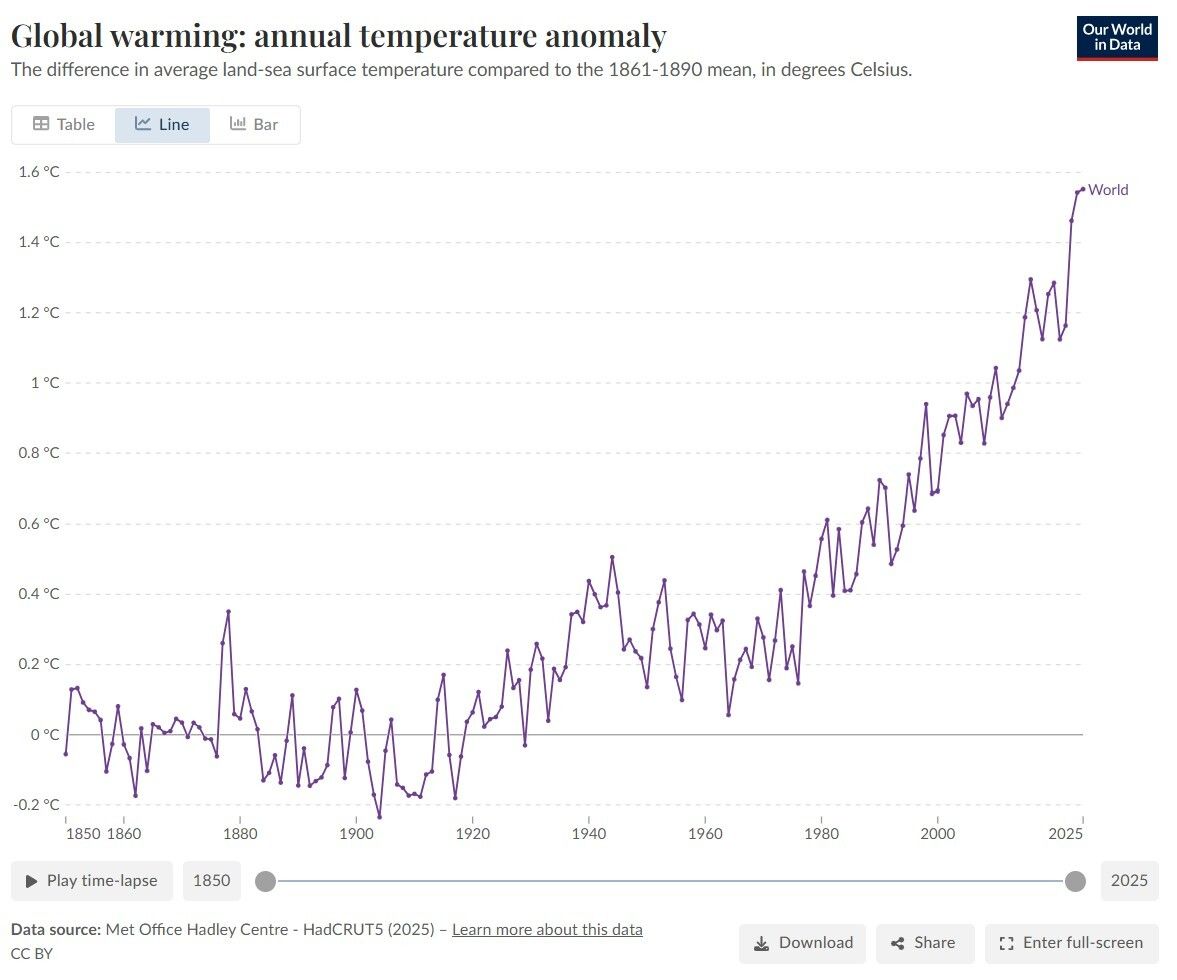
Extreme heat became the background condition! Southern Europe endured prolonged summer heat. Land and sea absorbed energy month after month. Heat is amplifying everything else on this list. Global Annual temperature for 2025 is projected to be 1.55 degrees Celsius above the 1861-1890 mean.
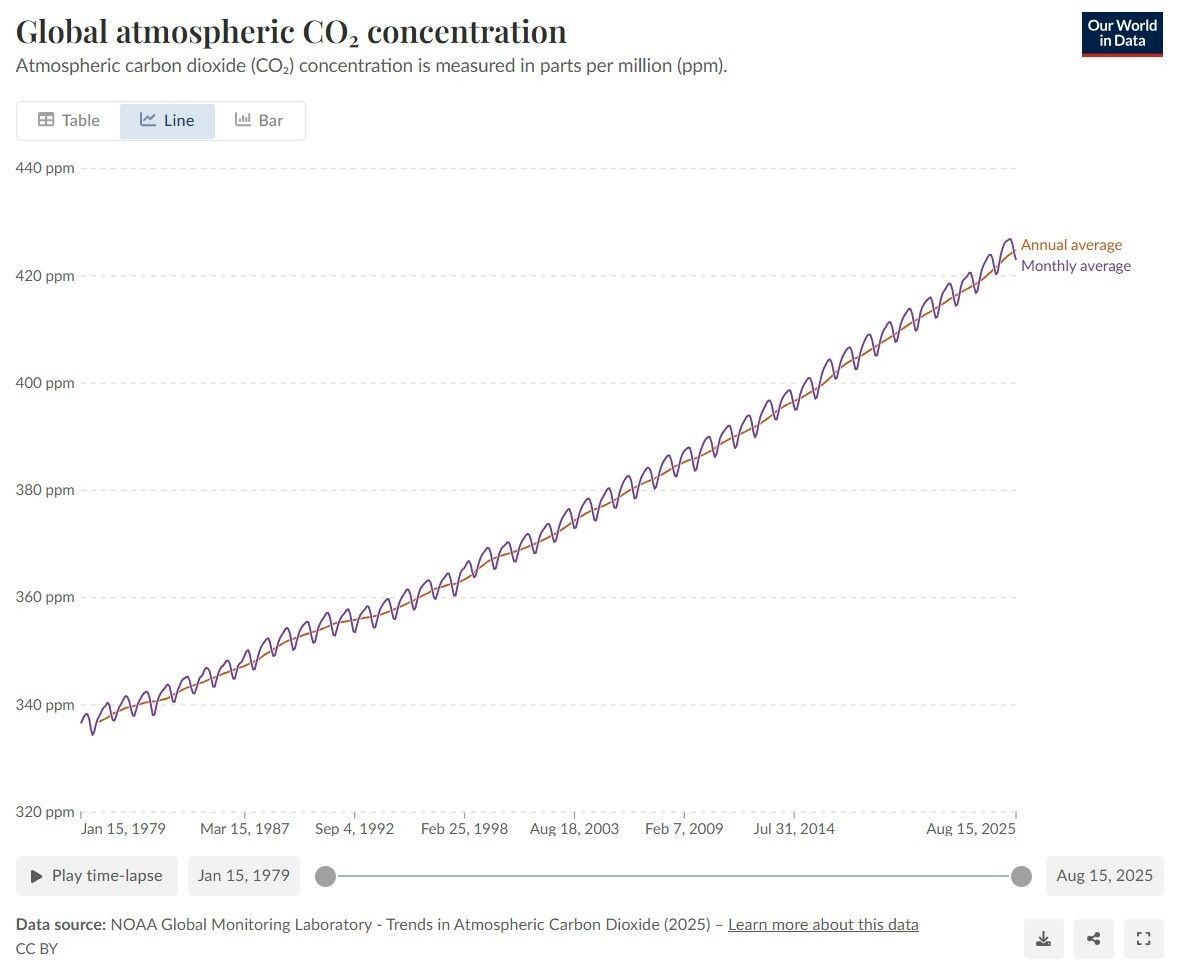
And the Global Atmospheric CO2 concentration reached 422.95 ppm on August 15 2025.


Global ocean heat is rewriting the rules!
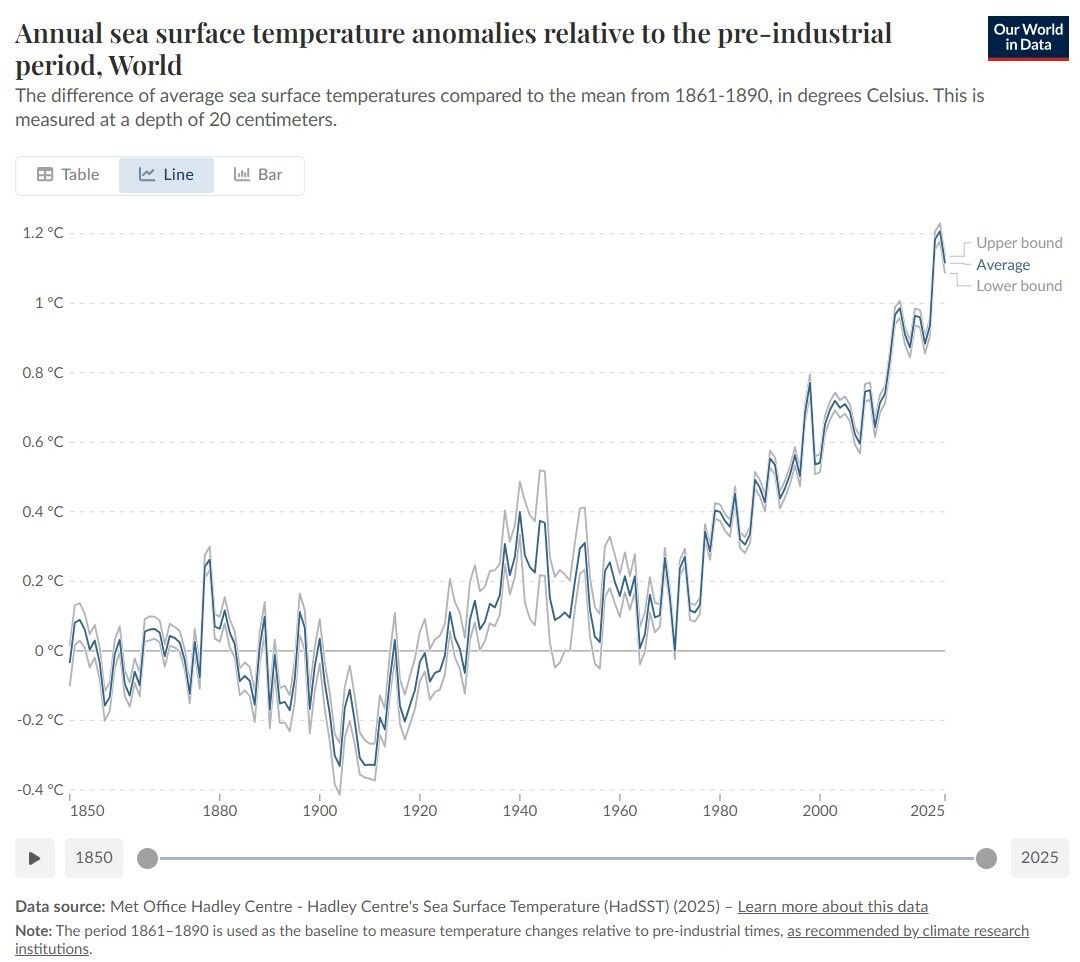
And this is where it all converged. In 2025, the oceans continued record heat levels. That heat: fueled stronger storms intensified rainfall stressed coral reefs altered marine food webs This wasn’t one event. It was the engine behind the year.

Global iNaturalist* Report

>62 Million Observations in 2025

>4 Million Species Identified in 2025

>7 Million Total Weekly Observers in 2025

>1.4 Million Total Weekly Identifiers in 2025
Global iNaturalist Project Spotlights
Five iNaturalist projects stood out to us during the year:
The City Nature Challenge 2025 project engaged people in cities across the world making observations of wild plants and animals for 4 days in April. It helped us better understand and care for the nature that lives in and around urban areas.
The Blitz the Gap project is a Canada-wide bioblitz which helped fill gaps in our knowledge of biodiversity in Canada. 2025 was it's first summer and ran from June 1 to October 1.
The Great Aussie Fungi Hunt 2025 invited people to explore their world during April. Observers contributed to our knowledge of fungi in Australia.
The Great Southern BioBlitz project was a 4 day international challenge of intense biological surveying across the Southern Hemisphere in April. The goal was to engage the greater public in science and nature learning
Big Butterfly Month India is India's largest citizen-led celebration of butterfly diversity. In September, people from every corner of the country stepped outside to spot, record, and protect butterflies.
Global iNaturalist Photo Highlights**

Zebra Conchylodes Moth - Conchylodes ovulalis - Belize

Orca - Orcinus orca - Antarctic Peninsula

Ural Owl - Strix uralensis - Russia

Namaqua Chameleon - Chamaeleo namaquensis - Namibia

King Bolete - Boletus edulis - California, USA
eBird Summary*
In 2025, the global birding community reached a scale never seen before. More than 140,000 people used eBird for the first time, and nearly 10 million people discovered birds through Merlin, often starting with a single sound, a single sighting, a single moment of curiosity.

ebird.org*
And then came the days when the world birded together.
May 10, 2025 — Global Big Day. For 24 hours: 1.8 million birders, 204 countries, nearly 8,000 bird species, the most ever recorded in a single day! That’s almost 80% of the world’s bird species, documented in one sunrise-to-sunrise cycle.
The momentum didn’t stop there. On October 11, 2025, October Big Day. Birders from every continent contributed 2.1 million individual bird observations in a single day, turning a shared moment into a global snapshot of migration, seasonality, and life in motion.
Together, eBird and Merlin didn’t just collect records in 2025 — they showed what happens when millions of people pause, look up, and pay attention to what’s still flying.
Audubon Christmas Bird Count*
This past season marked the 125th Audubon Christmas Bird Count. One hundred and twenty-five years of people stepping outside in winter to answer a simple question: which birds are still here?
It is the longest-running community science project on Earth, and in 2025 it reached another milestone. More than 2,600 count circles were surveyed, spanning neighborhoods, wetlands, forests, coastlines, and cities across the Americas. The map continues to grow.

audubon.org*
That growth is increasingly global. After a surge of new Canadian counts in the early 2000s, many of the newest Christmas Bird Count circles are now being added in Latin America and the Caribbean, expanding the program’s reach far beyond its origins.

audubon.org*
But here’s the line that matters most. Despite record participation, the total number of birds counted continues to decline. This pattern has been especially clear since 2014 — more people, more effort, more coverage… and fewer birds.

audubon.org*
The Christmas Bird Count doesn’t chase trends or short-term excitement. It waits, year after year, and because of that patience it offers something rare: a long, honest view of change.
It reminds us that attention is essential but protection is what ultimately determines the outcome.
Rebounds and Recoveries
Green Sea Turtles - Returning to Tortuguero! On protected beaches in Central America, Green Sea Turtle are coming ashore again. Not because conditions improved overnight but because protection held for decades.
The Rodrigues Warbler - Back from the Brink of Extinction! On a small island in the Madagascar region, the Rodrigues Warbler did the impossible. From just a few dozen birds in the 1970s… to around 25,000 today. Habitat protection and improvement enabled this warbler to be down listed to Least Concern.
Humpback Whales - A Global Comeback Across Oceans Worldwide! Humpback Whale populations continued their long recovery. Calves returned. Migration routes reopened. Historic feeding grounds were reoccupied. Proof that global agreements can work.
Bald Eagles - From Recovery to Permanence! In North America, the Bald Eagle is no longer a symbol of fragility. It’s a symbol of what happens when policy, protection, and patience align.
Hawksbill Sea Turtles - Local Wins on Fragile Reefs! In parts of the Caribbean and Indo-Pacific, Hawksbill Sea Turtle nesting numbers increased at protected sites. Not everywhere. Not guaranteed. But real — and hard-won.
Mangrove Forests - Quietly Rebuilding the Coast! Along come shorelines in Africa and Southeast Asia, mangrove forests have expanded and with them, fish, birds, storm protection, and carbon storage. Habitat first and then everything else follows.
2025 - A Wild Year
That’s what 2025 ultimately showed us. A planet under intense pressure, from heat, drought, fire, and storms but not without answers. Across the year, millions of people paid attention. They counted, recorded, shared, and returned to the same places again and again. And in that long view, we saw both truths at once: decline is real, but recovery is possible, when protection lasts long enough.
Coming Up Next Week — Two Rainforests
Next week is Week 1 of 2026, and we’re starting the new year on the equator. Two rainforests. Same latitude. Different continents.
On one side: Amazonia, the world’s largest rainforest, shaped by vast rivers and year-round rain.
On the other: Equatorial Afrotropics, the Congo Basin, dense, ancient, and often overlooked.
We’ll explore:
how these forests breathe
how wildlife moves through them
what the data shows right now
and what the new year may hold for each
I’ll see you next week as 2026 begins on a living planet!
— Naturalists’ World
*This content uses publicly available data from iNaturalist, eBird and the National Audubon Society. None of them endorse or sponsor this newsletter.
**Some images in this newsletter were shared on iNaturalist under a CC0 (public domain) license. We thank the contributors who generously chose to place their observations and photos in the public domain, helping make global nature education and conservation possible. Individual photographers are not attributed out of respect for personal privacy.
1